

 Share
Share 


With great anticipation since 2018, Shinnecock Hills Golf Club returns to host the US Open for what may prove to be the most punishing four days of golf we’ve seen over the last decade. I say this every year, but US Open week is the week I look forward to the most on the golf calendar. It is synonymous with great Father’s Day weekend memories, and a great run of recent bets on US Open odds has kept those sweet memories going. This year, it’s especially close to home, contested right in my backyard on Long Island, New York. When it comes to the US Open, we know to expect carnage, the threat of double-bogey or worse for any given hole, and any shortcomings in a player’s game to be exploited.
In the case of Shinnecock Hills, we’ll see a relatively new flavor of challenge compared to the more traditional Oakmont, Bethpage Black, Torrey Pines, Oak Hill, and the Winged Foots of the world. Beyond just being a beast to navigate, Shinnecock Hills is a pristine, meticulously manicured property that sets the stage perfectly for a major championship.
Shinnecock Hills is a proper links setup with small landing areas on its greens. That combination under a daunting USGA setup and expectedly high winds are all a recipe for extremely difficult playing conditions. Like in 2018, we should expect the most in-form ball-strikers and most reliable short game players to survive this gargantuan test by week’s end. Any player who can manage to stay below par over four days will prove to be a deserving champion.
Without further ado, let’s run through US Open odds, key facts, and info about Shinnecock Hills Golf Club ahead of the 2026 US Open.
US Open Betting Odds
Click on any US Open odds below to place a bet now.
The Field At A Glance
The US Open presents the strongest field in the world of golf. Compared to The Masters, the US Open offers a full field of 156 players with invites for past champions cut off at 10 years. Compared to the PGA Championship, any spots that would have been reserved for PGA Tour professionals are instead up for grabs via regional qualifying.
There are no surprise omissions at the 2026 US Open. All of the best in the world will converge at Shinnecock Hills this week. Scottie Scheffler stands in a class of his own as the prohibitive favorite this week, in hot pursuit of his very first attempt at the career grand slam. Rory McIlroy and Jon Rahm represent the second tier of in-form blue bloods, each a US Open champion themselves.
Who the next favorite should be after the first three is certainly up for debate. Cameron Young and Matt Fitzpatrick have had the best 2026 seasons in totality, but have looked imperfect at times over the last month. Brooks Koepka and Tommy Fleetwood are US Open mainstays and finished 1-2 in 2018, the last time Shinnecock Hills hosted. Ludvig Aberg, Bryson DeChambeau, and Xander Schauffele are marquee names, but have struggled to convert wins on the biggest stages this season. After the big 3, it truly does have the feel of a wide-open major championship
Aforementioned, Brooks Koepka is the defending US Open champion at Shinnecock Hills. He survived grueling, gusting conditions here in 2018, ultimately winning by a margin of one stroke over Tommy Fleetwood at 1 over par. It remains the only instance since 2013 in which a US Open was won above par.
J.J. Spaun is the defending US Open champion, slaying another beast in Oakmont CC in 2025. Koepka entered Shinnecock Hills in 2018 as the reigning US Open champion, which may spell a nice omen for Spaun, who is in the midst of great form this time of year yet again.
The list of former US Open champions teeing it up this week, in addition to Koepka and Spaun, also includes: Wyndham Clark, Matt Fitzpatrick, Jon Rahm, Bryson DeChambeau, Gary Woodland, Jordan Spieth, Justin Rose, and Rory McIlroy.
Introduction To Shinnecock Hills Golf Club
Shinnecock Hills Golf Club was established in 1891, a date that is closer to when America gained its independence (115 years) than now. 135 years later, Shinnecock Hills is renowned as a seminal institution of American golf architecture, and is recognized as a consensus top-5 golf course in the world.
One of the oldest golf clubs in America, with the oldest clubhouse, Shinnecock Hills is among the five charter clubs that formed the USGA.
While this plot of land’s history dates back to the 19th century, it became the course we know it as today in 1931 after William Flyn’s 1931 redesign. The project was spurred by a highway extension that ran into the old property. To combat this, the club purchased new land, and Flynn embraced the natural topography, making Shinnecock Hills play true to its name. The end result of the redesign was an emphasis on strategic playing options, dynamic wind exposure, and the intervention of more natural hazards.
Shinnecock Hills has a longstanding history hosting US Opens, given its tight connection with the USGA. It has hosted the event five times (1896, 1986, 1995, 2004, and 2018) and is set to host for a seventh time in 2036. Since it began to host the US Open as a 72-hole stroke play event for the first time in 1986, its champions include Raymond Floyd (-1), Corey Pavin (E), Retief Goosen (-4), and Brooks Koepka (+1).
Shinnecock Hills underwent an extensive restoration project in 2013 to prepare for the 2018 US Open. At the hands of Bill Coore and Ben Crenshaw, the course was restored to William Flynn’s original vision as an American links golf course apt to pose the sternest test to the greatest golfers in the world. The 2013 restoration project included planting new trees, slightly narrowing the fairways, and overhauling the turf grasses. The result was just as stern a test as we’ve seen historically at Shinnecock Hills, and with negligible changes made since 2018, we should expect a similar test again, eight years later.
While widely respected as a historical American golf institution, Shinnecock Hills is not without its criticism. Players don’t exactly love diabolical conditions, so when the forecast called for dry and windy conditions in 2004 and 2018, players were not shy to share their feelings. Phil Mickelson famously incurred a two-stroke penalty for striking his putt while destined to roll off of the green on the 13th hole in 2018. Zach Johnson was also famously quoted as saying they “Lost the course” by baking out the greens to extreme lengths after his third round in 2018.
The 2026 PGA Championship at Aronimink Golf Club was a timely reminder that course setup is everything in major championship. If this were a PGA Tour event, we may see softer greens and more accessible hole locations. However, this is the USGA we’re talking about, and they’ve made it very clear that they want the identity of their tournament to be the toughest test in golf. So despite the complaints received in 2018, I fully expect this to be an extremely firm set up with tucked pin locations that will necessitate elite iron play, strategic decision making, and deft touch around the greens.
Breaking Down Shinnecock Hills Golf Club
A 7,440-yard par-70, Shinnecock Hills is a long test, but far from the behemoths who push the absolute limits of the property they sit on, like Torrey Pines, Winged Foot, and Los Angeles Country Club have shown us in US Opens. For context, Shinnecock’s official yardage is just 44 yards longer than Aronimink and 70 yards longer than Oakmont, two recent major championships where accuracy prevailed over sheer power. Shinnecock Hills Golf Club is a Capital-C classic golf architecture institution, and truly transforms you back in time to the game’s humble beginnings on this stunning links setup in Southampton, NY.
Will distance play a distinct advantage at the 2026 US Open? I don’t think so. Controlling the golf ball from the correct angles is paramount at Shinnecock, with so many diagonal tee shots into these fairways. And while the fairways are generous, it feels as though the verdict of this tournament will come down to everything but driving.
For as generous as the fairways have been made out to be, firm and dry fairways will make this links setup feel much tighter than it looks, especially with the importance of creating angles into these tucked hole locations without running out of the fairway. Driving will not play a significant factor in determining who wins this tournament, but it may weed out lesser players who have a poor weak. This course is simply impossible to survive if you are consistently playing out of position.
It is a tail of two 9s at Shinnecock Hills. The front 9 plays in the lowlands upon which the club was established in 1891. This creates blind shots hidden by fescue, and plays heavily exposed to the wind. While playing 200 yards longer than the back 9, it is the easier-scoring side, and one players will need to capitalize on early. In calm early conditions, Brooks Koepka birdied three of his first four holes to take command of the tournament in the final round in 2018.
The back 9 is almost indistinguishable from the front, introducing the hills to Shinnecock Hills. Holes 10 and 11 are two of the most difficult on the property, featuring greens atop a severe upslope. Dramatic downhill tee shots can carry speed and risk running out into hazards throughout the back 9. There is double-or-worse potential on virtually every hole at Shinnecock Hills, requiring players to play with aggressive conviction on every shot.
Distinguishing Features
It sounds cliché, but there really is nothing else quite like Shinnecock Hills to compare it to. It is as if you took a traditional British Links course, stripped it of all its moisture, minimized and sped up the greens, and then allowed the USGA to place the pins in the most diabolical locations possible. Proper links courses are few and far between in the United States, giving this event a truly unique feel for a US Open.
Shinnecock Hills is designed to play increasingly more difficult as players get closer to the green. It can be described as a second-shot golf course, but there is an advantage to be had for long players to carry fairway bunkers with aggressive tee shots, as much as there is an advantage for shorter hitters to strategically create angles by taking on risky lines and playing to the proper side of the fairway. In my opinion, the story of who wins this event will have nothing to do with their off-the-tee play, so long as they can regularly avoid significant misses into the thick fescue rough.
Approach importance may also be mitigated to some extent, as the intervention of wind will assuredly deny ample perfectly-struck approach shots from holding these fast, firm, and severely sloped greens.
Simply put, you cannot survive four rounds at Shinnecock Hills in expected windy conditions if short game is not a strength. And for those who do have a world class short game, they’ll still need to convert a high volume of testy 5-10-foot par saves.
Its the endless acreage of short grass that truly distinguishes Shinnecock Hills from any other course. There is no long rough surrounding these greens, so any mishits will land on the green’s edge, and can roll for 20+ yards if they don’t find a greenside bunker to stop them. Players will need to be skilled around the green from tight lies in true links fashion, and we will see plenty of Texas Wedges throughout tournament week.
Looking more specifically at the hole breakdowns, Shinnecock Hills features two par-5s (592 yards and 614 yards). The two holes run in opposite directions on the property, with the intent to have one hole play as a 3-shotter into the wind, and the other to play as a rare, reachable birdie-or-better opportunity.
The Par-3s are the crown jewels of Shinnecock Hills, and are responsible for keeping the overall course yardage as short as it is. Only one par-3 plays beyond 190 yards, but the 252-yard 2nd hole may just be the least challenging of them all. The other three holes feature redan and Biarritz-style greens that encourage playing away from the hole and riding the undulations. Aggressive tee shots and misfires will create instant bogeys, so par-3 scoring will be crucial for contenders this week.
And finally, the par-4s feature an interesting distribution of six 490+ yard holes, four under 415 yards, and two in-between. That places an unusually low importance on mid-iron approach play, though the severity of the wind will significantly impact club yardages throughout the week.
All in all, short game is an absolute must at Shinnecock Hills, with scrambling figuring to be inevitable on this firm, fast, undulated, and wind-exposed setup. Of course, ball striking form is crucial as well, but this is a week I will weigh the importance of Short Game as high as I would at The Masters.
Shinnecock Hills Golf Club Specs
- Yards: 7,440
- Par: 70 (4x 3s / 12x 4s / 2x 5s)
- Greens: Poa
- Water Hazards: 2
- Rough: 5” Chewings Fescue (Very Thick)
- Avg. Fairway Width: TBC (Generously wide)
- Avg Green Size: 8,834 sq. ft. (Large)
- Architect: William Flynn, 1931 (2013 Restoration by Coore & Crenshaw)
- Comp Courses: Pinehurst No. 2, Chambers Bay, Southern Hills, Royal Portrush, The Old Course, Los Angeles Country Club, Kiawah Island, Royal Troon, Royal Liverpool, Pebble Beach Golf Links, Liberty National, TPC Scottsdale, TPC Sawgrass, The Renaissance Club
Event History & Course Comps
Course History can only go so far on rotating major venues like Shinnecock Hills, considering 8 years stand between now and when Brooks Koepka last emerged victorious in 2018. Severely windy conditions also factored into a very distinguishing test of a tournament in 2018.
We may be getting more of the same in 2026, as the forecast is calling for a windy tournament week with sustained winds up to 20 MPH. Analysts close to the course are predicting another grueling test, and a winning score near Even par once again.
US Open Betting History
The USGA embodies the same core characteristics in each of its chosen venues. Although Shinnecock Hills appears to be bomb-and-gouge-proof, longer hitters and elite ball strikers who can grind in difficult scoring conditions should continue to rise to the top of the leaderboard. With its tiny greens and penal fescue waiting for mis-struck shots, this is a week where any imperfections in a player’s game will be accentuated.
Eleven players avoided missing the cut over the last five US Open contests (min. three starts): Rory McIlroy, Hideki Matsuyama, Xander Schauffele, Brian Harman, Tom Kim, Brooks Koepka, Denny McCarthy, Harris English, Scottie Scheffler, Jon Rahm, and Patrick Reed.
Eleven players finished in the top 15 multiple times at the US Open in the last five years: Bryson DeChambeau, Rory McIlroy, Patrick Cantlay, Hideki Matsuyama, Scottie Scheffler, Xander Schauffele, Harris English, Jon Rahm, Collin Morikawa, Sam Burns, and Russell Henley.
Over the last five years, the top 10 players in US Open Event History are: Rory McIlroy, Scottie Scheffler, Jon Rahm, Xander Schauffele, Collin Morikawa, Russell Henley, Patrick Cantlay, Hideki Matsuyama, Bryson DeChambeau, and Sam Burns. This list further justifies a trend of elite ball striking, particularly with long irons, among annual contenders at the US Open. With Shinnecock Hills being a bit shorter than your typical US Open venue, we may see it buck the trend of elite long-iron players rising to the top, as scrambling and short-iron approach play will be more crucial here.
Course Comps
I usually spend the majority of my research time identifying the best course comps to project recent results within the past year onto the field for the upcoming week. In Majors, I tend to de-prioritize the importance of Comp Course History, as the atmosphere of a standard event is not comparable to that of a Major. However, there’s still value in referencing results on regular PGA Tour courses that ask for a similar style of play.
In this case, the strengths of Bogey Avoidance in difficult conditions, Scrambling, long-iron approach play, and all-around tee-to-green still translate.
If I had to compare Shinnecock Hills to another course, I would say it is a cross between Southern Hills and The Ocean Course at Kiawah Island. Each of these courses is severely exposed to the wind, requires delicate touch around tight fairway runoffs, and is generous enough off the tee for varying types of players to succeed. Both of these comp courses were won at 6-under-par in their most recent year hosting a major, so Shinneock Hills is still considerably more difficult by comparison.
It’s a great week to reference performance at any of the most recent Open Championship venues as well, with Royal Portrush, Royal Troon, Royal Liverpool, and St. Andrews each rewarding the skill of flighted approach shots to combat high winds, and creativity around the greens.
Looking back on recent US Open host venues, Shinneock Hills will play most similarly to Chambers Bay, another proper American golf links course where Jordan Spieth prevailed in 2015. Los Angeles Country Club would have been a perfect comp course, had it not been played under such soft conditions in the Marine Layer of 2023. Pinehurst CC, with its tricky turtle shell greens and steep penalty for significant misses off the tee, is another very strong US Open comp course.
Finally, when referencing PGA Tour stops as comp courses, there are elements of TPC Sawgrass, TPC Scottsdale, The Renaissance Club, Pebble Beach Golf Links, and Liberty National here as well. None of these courses match the difficulty of Shinnecock Hills, but they do predominantly share a links feel, and place a distinct importance on flighted approaches in the wind, as well as a premium on scrambling around the greens from tight lies.
Wrap that all together, and the top 10 players in comp course history are: Rory McIlroy, Scottie Scheffler, Jon Rahm, Tyrrell Hatton, Tommy Fleetwood, Sepp Straka, Ludvig Aberg, Cameron Smith, and Si Woo Kim.
Key Stats To Consider For US Open Odds
- SG: ARG / Scrambling
- Bogey Avoidance (Difficult Scoring Conditions)
- SG: Putting (L36, Fast Greens) / Approach Putting
- SG: T2G (Recent Form)
- SG: APP / Prox: 200+
- SG: TOT (Difficult Scoring Conditions)
- Total Driving (Driving Distance + Driving Accuracy)
- Comp Course History
- SG: TOT in Majors (L5 Years)
Having hosted just two US Opens since 2004, we don’t have as much data to pull from to directly ascertain how players need to profile to find success at Shinnecock Hills. But we’ll do the best we can with the eight rounds of sample size we do have over that period.
You won’t have to search hard to find hole-by-hole breakdowns this week. The overarching takeaway from the visuals of this course is that, while the fairways are generous in width, Shinnecock Hills will effectively be “Bomb and Gouge” proof, instead forcing players to rely on precise ball striking and elite touch around the greens to separate. It is a moderately long course, standing just over 7,400 yards as a par-70, but it is not diabolically long like other recent US Open venues.
In theory, the player who separates himself from the pack this week should enter in strong all-around tee-to-green, with their short game serving as their greatest and most dependable asset.
Model Focus: US Open Odds
I’m putting a significant emphasis on SG: ARG in my models, as I will start to cross off players from contending if they are not able to consistently scramble for pars from around the green. The top-10 in SG: ARG leading into this week are: Cameron Smith, Matt Fitzpatrick, Patrick Reed, Andrew Putnam, Jon Rahm, Jason Day, Scottie Scheffler, Maverick McNealy, Sungjae Im, and Patrick Cantlay.
Looking more holistically, 13 players rank above-average in SG: ARG, SG: Short Game, Scrambling, and Bogey Avoidance in Difficult Scoring Conditions: Scottie Scheffler, Ludvig Aberg, Rory McIlroy, Matt Fitzpatrick, Cameron Young, Xander Schauffele, Tommy Fleetwood, Russell Henley, Collin Morikawa, Patrick Cantlay, Brian Harman, Nick Taylor, and Harry Hall.
In the simplest terms, I believe the key to winning this week is elite recent form and elite short game. Six players rank top-25 in SG: TOT (L24 rounds), Bogey Avoidance in Difficult Scoring Conditions, and SG: ARG: Scottie Scheffler, Patrick Reed, Jon Rahm, Matt Fitzpatrick, Tommy Fleetwood, and Patrick Cantlay.
Second to around-the-green, I believe it’s the players who are most skilled with the speed on the greens who can separate on this golf course. With greens this fast and tightly mown, it will be best for players to bail out away from pins when out of position, and rather than scrambling for par, they’ll need to be tactful on the greens with their approach putting to avoid three-putts.
The top-10 players in Approach Putting on fast greens are Sam Burns, Ben Griffin, Cameron Smith, Matti Schmid, Jake Knapp, David Puig, Harris English, Patrick Rodgers, Ryan Gerard, and Patrick Reed.
From an approach standpoint, Shinnecock Hills is unique from a traditional US Open venue. We’ve seen the USGA push the limits of course yardage over the years, which has effectively boiled the competition down to who can be most effective with their long irons. That will not be the case at Shinnecock Hills. Approach play, in my opinion, will be secondary to short game, as players will rarely be firing at pins.
However, there are several holes where a good tee shot will leave players a short wedge in, and these may be the few opportunities players have to go for birdies. With that said, I’ll focus specifically on Prox: 200+ when handicapping approach play this week. The top 10 from this distance are: JJ Spaun, Collin Morikawa, Ludvig Abeg, Adam Scott, Brooks Koepka, Ben Kohles, Wyndham Clark, Joaquin Niemann, Cameron Young, and Alex Smalley.
As this is a major championship, we are ideally looking for a well-rounded player in each of these areas. Just nine players rank above average in SG: OTT, SG: APP, SG: ARG, and SG: P: Scottie Scheffler, Ludvig Aberg, Jon Rahm, Cameron Young, Xander Schauffele, Tommy Fleetwood, Russell Henley, Si Woo Kim, Justin Thomas, and Kristoffer Reitan.
Scoring In Difficult Conditions
Anytime the USGA is involved, you know the intent is to make scoring conditions as difficult as possible. Given the unique topography and likelihood to move tees and pins daily, it’s difficult to use performance on standard courses to project success here.
Instead, scoring in difficult conditions will more broadly capture those who are best equipped to handle everything Shinnecock Hills throws their way. The top 10 in SG: TOT (Difficult Scoring Conditions) are: Scottie Scheffler, Sam Burns, Rory McIlroy, Xander Schauffele, Tommy Fleetwood, Matt Fitzpatrick, Maverick McNealy, Bryson DeChambeau, Robert MacIntyre, and Ludvig Aberg.
The ideal player for Shinnecock Hills should rank above-average in SG: ARG, Bogey Avoidance, Comp Course History, SG: TOT (L36), SG: TOT (Majors L5 Years), and SG: APP. Just 11 players fit that criteria: Scottie Scheffler, Rory McIlroy, Xander Schauffele, Tommy Fleetwood, Matt Fitzpatrick, Ludvig Aberg, Russell Henley, Cameron Young, Collin Morikawa, Patrick Cantlay, and Brian Harman.
Correlation
While we don’t have much to go on for Shinnecock Hills, there’s still merit in using what’s been taken to find success at past US Opens to project an ideal profile for this week, given the constant throughline of the USGA governing.
Looking over the stats, I prioritized Par-5 Scoring and SG: OTT at the US Open far less compared to the tour average. That makes sense, considering the USGA historically converts usual Par-5s into long par-4s, commonly playing to Par-70.
From an OTT standpoint, we’ve seen players start to freely swing the driver over the last few contests. They accept that fairways will be difficult to hold and instead opt to play their second shots closer to the hole. Conditions will be much different at Shinnecock Hills, though elite total driving will still give players a leg up if able to drive to hold these tight fairways at distance.
Par-4 Scoring
Par-4: 400-450 is another stat that plays far less of an important role at the US Open than average. The USGA typically extends tee boxes back to play closer to 500 yards and rewards a player with an all-around complement of both distance and accuracy. Just two Par-4s at Shinneock Hills fall between 400-450 yards.
The stats that take the biggest leap forward in terms of importance at a US Open are Par-4: 500+, SG: ARG, Driving Distance, and Doubles Avoided. Each of these categories will continue to be advantageous at Shinneock, although wide fairways may level the playing field for overall driving importance this week. Notably, each of these stats ranks inside the top 15 of importance at the US Open while outside the top 25 on average.

Top-10 Correlated Stats with SG: TOT
Top-10 Correlated Stats with SG: TOT at the US Open
Eleven players in the field rank above average in each of the above key stat categories I’m looking for this week: Scottie Scheffler, Rory McIlroy, Xander Schauffele, Tommy Fleetwood, Matt Fitzpatrick, Ludvig Aberg, Russell Henley, Cameron Young, Collin Morikawa, Patrick Cantlay, and Justin Thomas.
Player Spotlight For US Open Odds & Bets: Cameron Smith
Generous fairways, you say? You don’t hear the term “generous” often in association with US Opens, but that has been the buzzword for players who have played recent practice rounds at Shinnecock Hills when describing the fairways. That should be music to the ears of Cameron Smith, who feasted on the generous fairways of St. Andrews in his 2023 Open Championship victory. It’s no coincidence that Smith’s two career US Open top-5 finishes have come on similarly generous and links-like driving venues (Los Angeles Country Club & Chambers Bay).
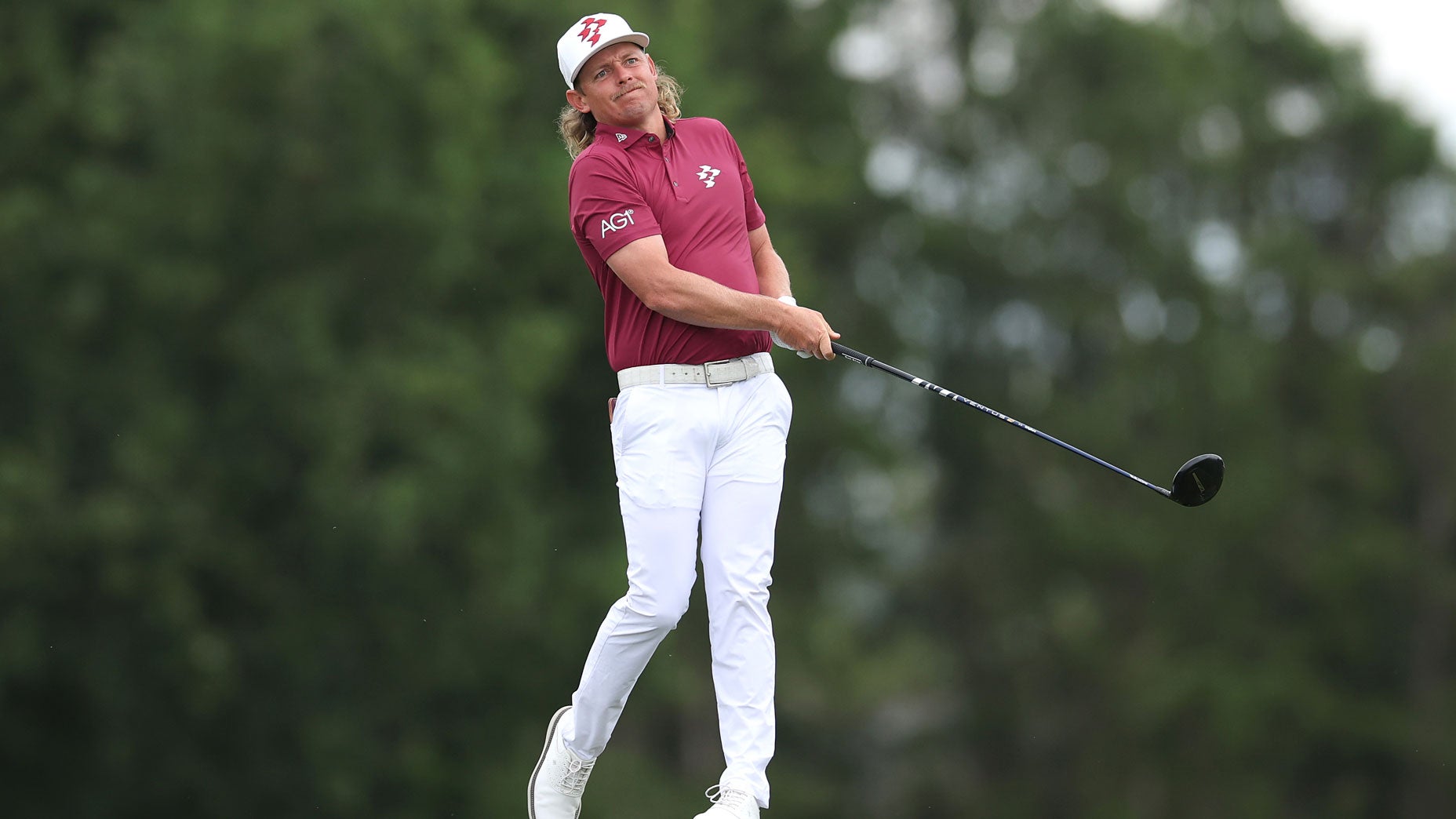
It’s taken a long time, but Smith is finally starting to play like his past dominant self on LIV again. He’s finished T7, T16, and T5 over his last three starts, and has done so in vintage form, with huge gains from fairway to green. Smith’s T7 at the PGA Championship last month notably snapped a streak of six-straight missed cuts in majors, so he should enter Shinnecock Hills with some newfound confidence in his game.
Generally speaking, anyone who has won The Players and The Open over the last four years is fully capable of winning at Shinnecock Hills as well. The driver, as always, is the concern for Smith. But if he can sustain his world-best short game, it may not matter.
Ranking 1st in the field the most important stat, SG: ARG, and 4th in Weighted Putting, there is nobody I trust more in a scrambling contest than Cameron Smith. He will be a fixture on my 2026 US Open betting card as he sets out to make his debut at Shinnecock Hills.
US Open: DFS Player Pool
With all the course-fit profiles in mind, I’m leaning early toward the below player pool. Naturally, I’m looking their way in the 2026 US Open odds as well. I’ve broken the list down by projected pricing/odds tier for DraftKings.

US Open Odds: Model Results & Breakdown
In my model, I’m emphasizing SG: TOT (Majors L5Y), SG: TOT (L36), SG: ARG, Scrambling, Bogey Avoidance, SG: APP, and SG: P (Fast Greens), followed by a balanced mix of Prox: 200+, SG: TOT (Difficult Scoring Conditions), Comp Course History, and SG: OTT.
US Open Odds: Model Favorites
Unsurprisingly, it’s Scottie Scheffler who comes out on top of the model. Ranking No. 1 in SG: T2G, SG: OTT, SG: APP, SG: ARG, Bogey Avoidance, and SG: TOT (Difficult Scoring Conditions), it’s tough to argue against Scheffler’s chances to pick up the career grand slam this week. The odds agree, and I am given very strong consideration to bet him to win the 2026 US Open outright. If there were ever a US Open for Scheffler to win, it would make sense for it to come on a classical venue that values strategy, creative shot making, and elite touch around the greens.
After Scheffler, the rest of my model’s top 10 is rounded out by: Ludvig Aberg, Jon Rahm, Rory McIlroy, Matt Fitzpatrick, Cameron Young, Xander Schauffele, Tommy Fleetwood, Patrick Reed, and Russell Henley.
I haven’t placed any futures just yet, but I will be giving serious consideration to backing Scottie Scheffler in his career slam bid. I will also consider Cam Smith and Patrick Reed as my top targets when 2026 US Open odds adjust on Monday.
Check back in later this week for more updates. Best of luck navigating the 2026 US Open odds board.
Best Sportsbooks For US Open Odds
Photo Credit: AP/Carolyn Kaster