Prediction Markets vs. Pick’Em: Which platform to use in 2026


Prediction markets and Pick ’Em sites are two popular ways for sports fans to get more involved in the action and put their knowledge to the test. While both revolve around predicting outcomes, they work differently when it comes to how picks are made, how odds are set, and how winnings are paid out.
In this guide, we break down Prediction Markets and Pick’Ems, highlighting how each model functions, where they differ, and which type of experience might make more sense for you.
Prediction Markets vs. Pick’Em: Overview
| Feature | Prediction Markets | Pick’em |
|---|---|---|
| Platform Type | Event-based trading | Fantasy sports-based contests |
| How Users Participate | Buy/sell positions | Build lineups or make picks |
| Market Types Offered | Sports, politics, finance, entertainment, weather | Sports |
| Payment Methods | Credit/Debit, PayPal, Venmo, Online Banking | Credit/Debit, PayPal, Venmo, Online Banking |
| Regulation Style | Federal level | State level |
| Typical User | User with experience in stocks, interested in buying/selling positions on sports as well as niche markets | Casual users looking to bet on their favorite players for larger payouts |
Users can trade on whether an event will happen or not by buying and selling contracts whose prices move based on demand at Prediction Markets. The price reflects how likely the market thinks an outcome is, while users can often adjust or exit positions before an event settles.
Pick’Ems takes a simpler approach, asking users to make yes/no or over/under selections against preset lines, usually combining multiple picks into a single entry with a fixed payout. Unlike Prediction Markets, which feature culture and politics in addition to sports, only sports are available at Pick’ems.
What Are Prediction Markets?
Prediction markets are platforms where users trade on whether a specific event will happen or not by buying and selling contracts tied to that outcome. The price of a contract reflects the market’s collective view of how likely the event is to occur, with prices rising or falling based on demand. In many cases, users can enter a position by buying a contract and later exit by selling it before the event settles, rather than being locked into a single outcome.
Prediction markets offer contracts on a wide range of real-world outcomes, including sports results as well as politics, financial events, entertainment awards, and other major news-driven developments.
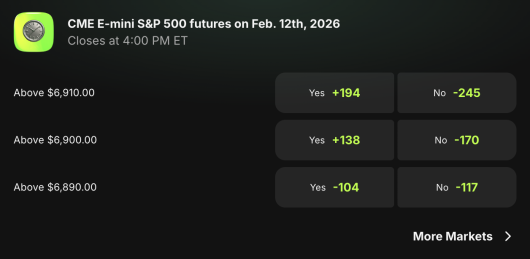
How to Make Money With Prediction Markets
In prediction markets, users make money by buying “yes” or “no” positions on whether an event will happen. Each position has a price that moves up or down as new information becomes available and as other users buy or sell based on their opinions. If a user buys a position at a lower price and later sells it at a higher price, or holds a winning position until settlement, the difference between the purchase price and the final value represents their profit.
What Is Pick’Em?
Pick’Em platforms allow users to make simple predictions on player or team performance. This is done by choosing whether an outcome will go over or under a preset line or resolve as a yes or no. Users typically combine multiple picks into a single entry with a fixed payout determined at the time of submission. Once picks are locked in, they cannot be changed or exited early. The entry either wins or loses based on the final results.
How to Make Money With Pick’Em
Users on Pick’Em platforms make money by correctly selecting the outcomes of their picks, such as whether a player goes higher or lower on a statistical line (similar to an over/under).. Payouts are fixed in advance or determined by a multiplier based on the number of picks included in an entry. Once an entry is submitted, there is no ability to trade out or adjust selections, so the result depends entirely on whether the original picks are correct. Do note there is an option to choose the safer option, where you take a lower payout but have a chance to win your Pick’Em even if you get one wrong.
Prediction Markets vs. Pick’Em Contest Types
Let’s take a closer look at the contest types available at Prediction markets and Pick’Ems.
Prediction Markets
Prediction markets typically offer individual event contracts tied to a single outcome, such as whether a team will win, an event will occur, or a threshold will be reached. Their main strength is flexibility, as users can often buy, sell, or exit positions before an event is settled while benefiting from market-driven pricing that reflects collective sentiment. The primary limitation is that pricing can move quickly in lower-liquidity markets. Also, the format may feel more complex to users who prefer fixed odds or simple entries.
Pick’Em
Pick’Em contests involve selecting multiple player or team outcomes, most often in over/under or yes/no formats, and combining them into one entry with a predetermined payout. Their strength lies in simplicity and accessibility, making them easy for casual users to understand and play. The main limitation is the lack of flexibility, as picks are locked once submittedm where users cannot adjust or exit entries early, even if circumstances change.
In short, Prediction Markets are like buying/selling props, while Pick’Ems are making player prop picks, choosing over or under on preset lines. Many sites will let you combine multiple selections into the same entry, similar to parlays at online sportsbooks.
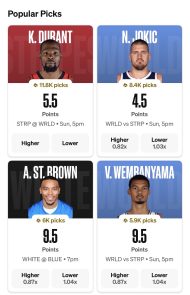
Prediction Markets & Pick’Em: Fees & Costs
Both Prediction Markets and Pick’Em platforms involve costs that can affect profitability, but those costs are structured differently.
Prediction Markets
Prediction markets may charge small trading fees when users buy or sell positions, though some platforms build these costs directly into contract pricing rather than listing them separately. Deposit and withdrawal fees are often minimal or non-existent, but users may still encounter costs depending on the payment method. In lower-activity markets, wider spreads or price slippage can also affect execution.
Example: If a user deposits $100 and makes several trades, total costs are influenced by how often they trade and how prices move, rather than by a single, fixed entry fee.
If you’re new to these platforms, check out our page on Prediction Market Strategies for tips on how to get started.
Pick’Em
Pick’Ems use fixed entry amounts or buy-ins, with payouts or multipliers set by the platform at the time an entry is created. Once picks are submitted, there are no trading or adjustment fees, since entries cannot be changed or sold.
Example: A $100 deposit might be used to place several Pick’Em entries, each with a known payout structure determined upfront. If you placed an entry with four picks, your payout may be 8x. If you chose the option where you can win if you get one wrong, your payout may be reduced to 3x.
Prediction Market Liquidity vs. Pick’Em Availability
Liquidity plays an important role in Prediction Markets because it determines how easily users can enter or exit positions at fair prices. Since these markets rely on other participants buying and selling contracts, higher activity generally leads to smoother price movement and easier execution. On the other hand, lower activity can result in wider spreads or slower exits. This trading-based structure gives users flexibility but also ties the experience to market participation.
Pick’Em platforms work differently, as availability is based on the contests and lines offered by the platform rather than on other users’ activity. Once a Pick’Em entry is submitted, the picks are locked and cannot be adjusted or exited early, regardless of new information.
The only decision you make when placing your entry is how much money you want to risk and whether you want to choose the safer option (allowed one wrong) or the standard option (need a perfect entry to win).
The key distinction is that prediction markets prioritize flexibility and the ability to manage positions over time, while Pick’Em platforms offer simplicity but without the option to sell out of your position early.
Prediction Markets User Experience vs. Pick’Em User Experience
Let’s compare the user experience for both Prediction Markets and Pick’Ems.
Prediction Markets
Using a prediction market typically begins with account creation and identity verification, especially on platforms that operate under regulated frameworks. This includes creating a username/password and providing a government-issued ID.
Once active, users can adjust trades in real time by buying or selling positions as prices change, rather than being locked into a single outcome. The interface often resembles a trading platform, showing prices, movement, and available positions.
While most prediction markets offer mobile access, the overall mobile experience can vary depending on the platform’s design and market activity. In my experience, I found Underdog Predictions to be quite intuitive.
Pick’Em
Pick’Em platforms are built for speed and simplicity, with fast sign-up processes and minimal friction before users can start playing. Often, you don’t have to verify your identity until it’s time to make a withdrawal.
Pick selection is straightforward, involving quick over/under or yes/no choices against preset lines. These platforms are highly optimized for mobile use, with each sport is organized into leagues, where you can filter your search to find your preferred player efficiently.
However, once picks are submitted and entries are locked, you don’t have the flexibility to sell out of a position before the event is settled.
Deposits, Withdrawals & Wallets
| Feature | Prediction Markets | Pick’Em Platforms |
|---|---|---|
| Payment Methods | Fiat, crypto, or both | Primarily fiat |
| Wallet Setup | Built-in or external wallet | Built-in balance |
| Typical Withdrawal Speed | Minutes (crypto) or a few days (fiat) | 1-5 business days |
Do note that a built-in wallet is when the platform holds funds, while an external wallet is when users connect their own wallet from a third-party source. External wallets are usually used when crypto payments are involved.
Customer Support Comparison
Next, we’ll dive into a comparison of customer support on each of these platforms.
Prediction Markets
Customer support for prediction markets typically includes email, help centers, and sometimes community or educational resources. You may also find a 24/7 live chat. Response times can vary depending on the platform and the complexity of the issue being addressed. Because prediction markets involve trading mechanics and contract settlement, support inquiries often require more detailed explanations than standard entry-based platforms.
Pick’Em
Pick’Em platforms commonly offer email and live chat support, making it easy for users to get help with basic account or contest questions. Response times are often faster for common issues since the format is simpler and less complex than trading-based platforms. As a result, customer support tends to be more consistent and straightforward across most Pick’Em sites.
Security & Trust: Prediction Markets vs. Pick’Em
| Feature | Prediction Markets | Pick’Em Platforms |
|---|---|---|
| Account Security | 2FA authentication, biometric login | 2FA authentication |
| How Funds Are Held | Platform-held or user-controlled | Platform-held |
| Known Security Issues | Rare | Rare |
Prediction Markets Pros & Cons
Prediction Markets have their fair share of pros and cons, outlined below.
Pros
- Wide range of events beyond sports, including politics, finance, and more
- Flexible trading with the ability to enter and exit positions
- Market-driven pricing that reflects collective sentiment
- Greater control over risk management compared to locked entries at Pick’Ems
Cons
- More complex for beginners compared to simple pick-based formats
- Prices can change quickly, while availability may vary by region
- Pick’Em Pros & Cons
- Pick’Ems are easy to use, but they have pros and cons as well, as follows.
Pick’Em Pros and Cons
These are positives and drawbacks to pick’em, just like there are for prediction markets and any other type of platform in this space.
Pros
- Easy-to-understand format with simple pick selection
- Clear layouts that make entries quick and intuitive
- Strong mobile experience designed for on-the-go use
- Fixed payouts, allowing users to know their potential winnings immediately
Cons
- Limited primarily to sports with fewer event types
- Picks are locked once submitted, with no flexibility in trading or adjustments
Prediction Market vs. Pick’Em: Which Platform is Better?
There’s no single “better” option when comparing Prediction Markets and Pick’Em platforms. The right choice depends entirely on what kind of experience you’re looking for.
Prediction markets operate more like trading on prop-style markets, offering flexibility, market-driven pricing, and access to a wide range of events beyond sports. Pick’Em platforms, by contrast, are designed for fast, straightforward gameplay, with locked-in picks and fixed outcomes focused entirely on sports.
Prediction markets may be a better fit if you:
- Want flexibility to enter and exit positions
- Are interested in non-sports events like politics or economics
- Are comfortable with prices changing over time
- Prefer a more market-driven, trading-style experience
Pick’Em platforms may be a better fit if you:
- Want a simple, sports-focused experience
- Prefer fixed payouts and locked-in picks
- Like quick, mobile-friendly gameplay
- Don’t want to manage or adjust positions after submitting picks