
 Share
Share 


The Masters is the great constant in the world of golf. It is the only one of the four majors not played in a rotation. Legends of every era in golf’s history have come through Augusta, but none would tell you that they truly “mastered” The Masters.
For all the familiarity we have with the course – the masses of casual sports fans tuning in every single April – it is the most nuanced and evolving, almost sentient being, in golf.
While minor cosmetic changes have been made over the years and tee boxes have been moved back in response to the advancements of modern ball and club technology, the bones of Augusta National and the intent with its routing, have not.
In this article, we’ll go over all 18 holes at Augusta National, ranking them by (1) scoring difficulty, (2) entertainment value, and (3) my personal preference.
Course Specs
- Course: Augusta National Golf Club
- Location: Augusta, GA
- Par: 72 (10 Par-4s, 4 Par-3s, 4 Par-5s)
- Yardage 7,565
- Fairways/Rough: Ryegrass
- Greens: Bentgrass
- Architect: Alister MacKenzie and Bobby Jones (1933)
- # of Bunkers: 44 (2nd fewest on PGA Tour)
- # of Water Hazards: 6
Scorecard At A Glance: Hole Rankings By Order Of Difficulty

Hole 1: Tea Olive
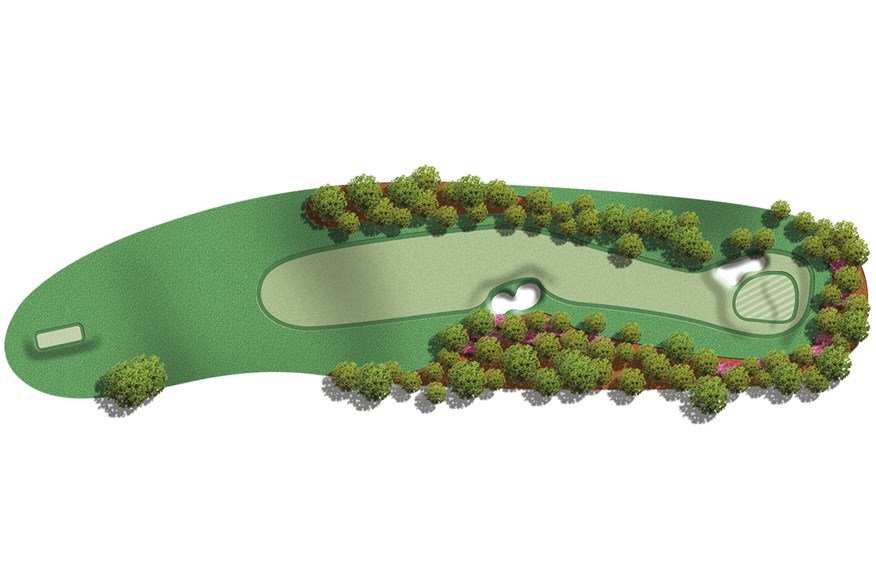
Par 4 | 455 yards
- Difficulty Rank (1 = hardest, 18 = easiest): 6
- Entertainment Factor (out of 10): 9
- John’s Grade (1 = best hole, 18 = worst hole): 11
“Fore please! Now Driving…”
The first tee shot at Augusta National has an aura about it that stands alone in the world of golf. Architecturally, it is a fine hole, and it may rank somewhere in the 14-18 range of my power rankings if it were, say, hole #5 on the scorecard. But the pageantry of it all stands the test of time.
With a dense treeline on the left and a very popular bunker on the right side of the fairway, there is nowhere to bail out to on this very nervy opening hole.
There’s a saying in golf, “You can’t win a golf tournament on the first hole, but you can lose it.” That does not apply to hole 1 at Augusta National. Both Jon Rahm and Rory McIlroy made double-bogey on this hole in their respective Masters victories.
Hole 2: Pink Dogwood
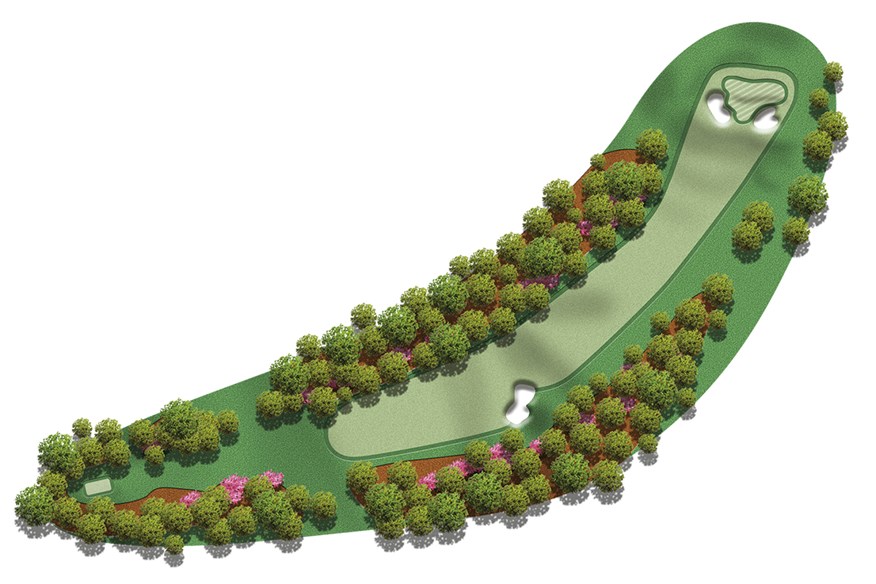
Par 5 | 585 yards
- Difficulty Rank (1 = hardest, 18 = easiest): 18
- Entertainment Factor (out of 10): 9
- John’s Grade (1 = best hole, 18 = worst hole): 4
Hole 3: Flowering Peach
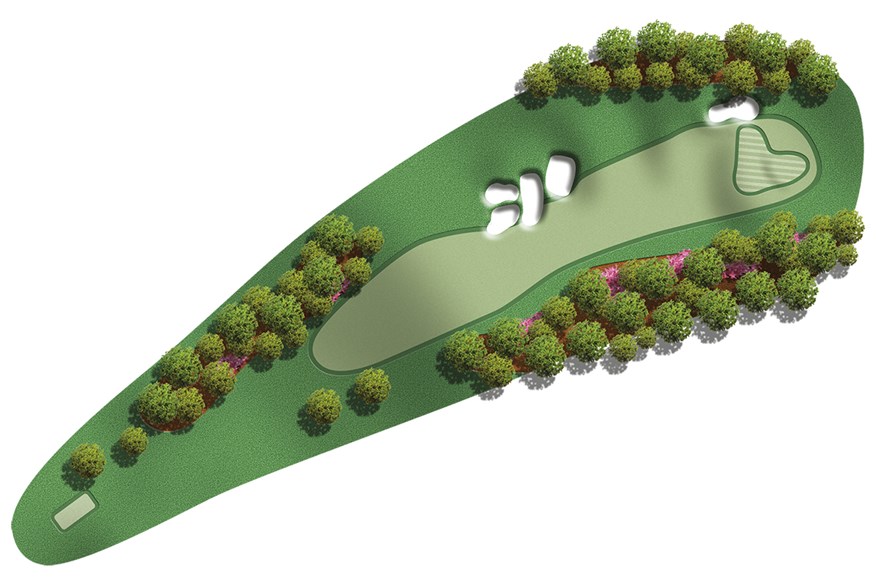
Par 4 | 350 yards
- Difficulty Rank (1 = hardest, 18 = easiest): 15
- Entertainment Factor (out of 10): 9
- John’s Grade (1 = best hole, 18 = worst hole): 3
Justin Thomas, amongst others, has called Flowering Peach the best short par 4 in the game of golf. While everything is right in front of you, it can be impossible with the wrong angles.
At 350 yards, it’s not a hole players expect to drive the green on, but a wedge in hand is ideal to hold this incredibly nuanced green. Contending hopefuls see this as a great birdie opportunity, but overly aggressive play can easily bring bogey into play. This is the type of hole in which your average weekend golfer could conceivably four or five-putt.
Scottie Scheffler’s chip-in birdie in the final round of the 2022 Masters is, in my opinion, the greatest highlight of his career to date.
Hole 4: Flowering Crab Apple
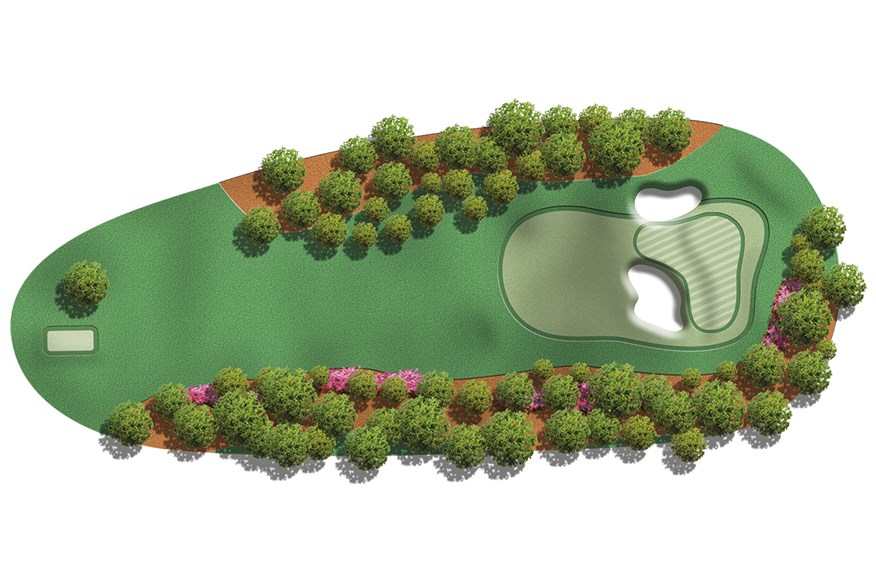
Par 3 | 240 yards
- Difficulty Rank (1 = hardest, 18 = easiest): 5
- Entertainment Factor (out of 10): 2
- John’s Grade (1 = best hole, 18 = worst hole): 18
A mouthful of a name, a handful of a hole. Flowering Crab Apple does rank No. 1 on my Hole Name Power rankings, but it is my very least favorite golf hole at Augusta National.
At 240 yards, this is the longest par-3 on the property, and while it is no gimme, it is the most straightforward of the par-3s. Playing downhill with a bunker to the front and left, very few birdies are made here. Players approach this hole just trying to make par and advance.
With no significant moments born from this hole, it is the most forgettable and least nuanced on the course in my opinion.
Hole 5: Magnolia
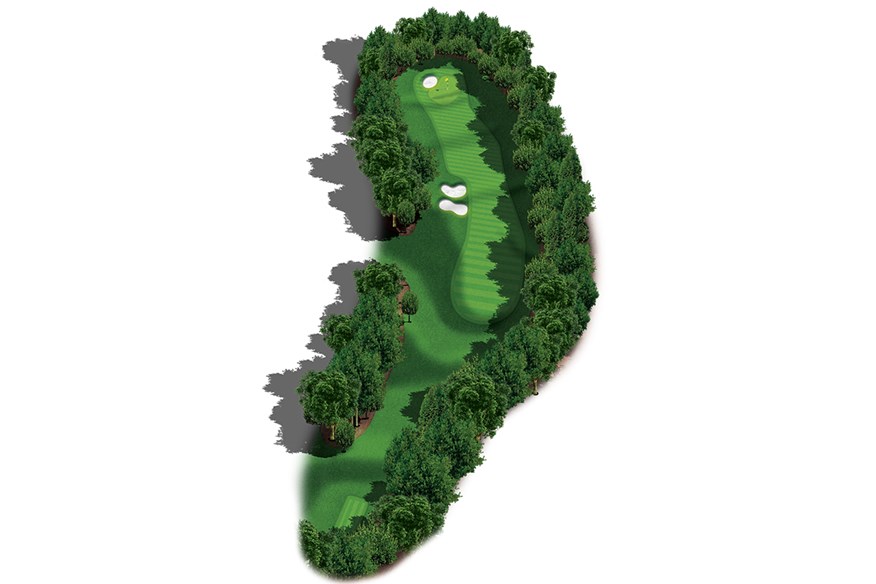
Par 4 | 495 yards
- Difficulty Rank (1 = hardest, 18 = easiest): 1
- Entertainment Factor (out of 10): 6
- John’s Grade (1 = best hole, 18 = worst hole): 12
I have great respect for this hole, playing as the most difficult hole on the most challenging course in golf. A 495-yard behemoth with no margin for error right of the fairway, and massive bunkers in the left-side landing areas, this is one of the most demanding tee shots on the property.
Players who strike a perfect drive off the tee are not home yet either. This massive, undulated green can be tricky to hold in firm conditions, and requires great touch on the greens to escape with a two-putt.
Hole 6: Juniper
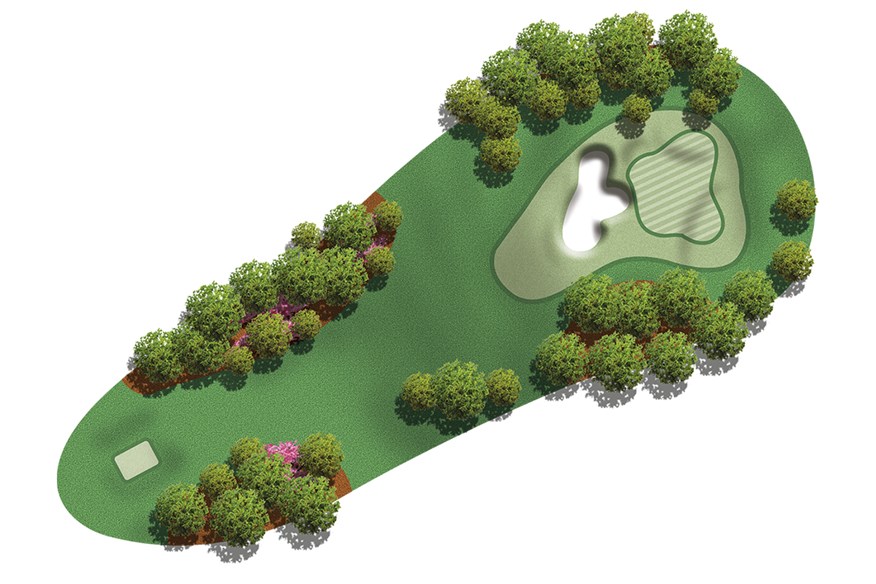
Par 3 | 180 yards
- Difficulty Rank (1 = hardest, 18 = easiest): 11
- Entertainment Factor (out of 10): 7
- John’s Grade (1 = best hole, 18 = worst hole): 9
When we talk about the importance of strategy, experience, and a disciplined game plan at Augusta National, Juniper is a great microcosm of that all wrapped up in one hole. There are hidden undulations in this green that allow experienced players to ride these slopes with imaginative approaches.
Tiger Woods’ approach into 6 in the final round of the 2011 Masters perfectly captures the essence of this hole.
Hole 7: Pampas
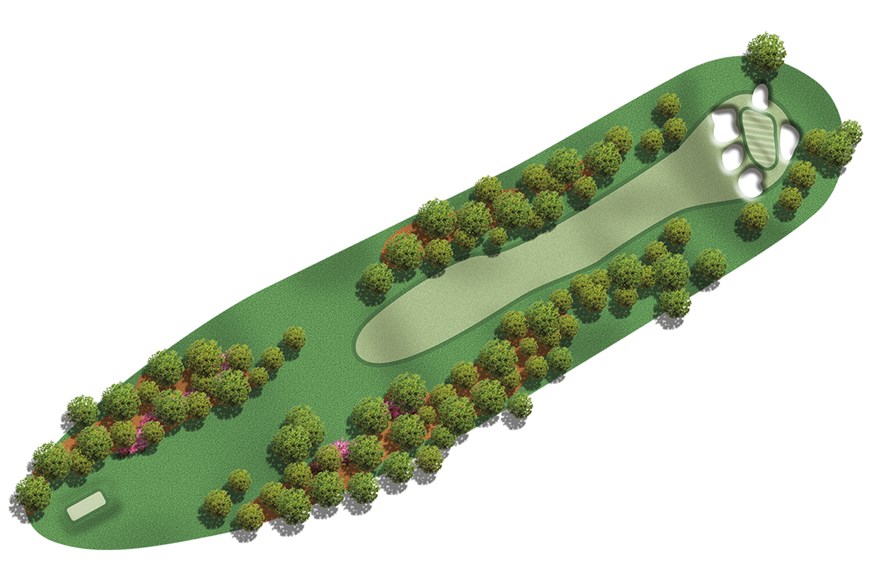
Par 4 | 450 yards
- Difficulty Rank (1 = hardest, 18 = easiest): 10
- Entertainment Factor (out of 10): 7
- John’s Grade (1 = best hole, 18 = worst hole): 14
Augusta National is known for its ample forced shot shapes, asking players to consistently work the ball in both directions. Pampas acts as one of the few exceptions to that rule. Here, you simply have to keep the ball as straight as possible off the tee.
This green is an island surrounded by bunkers, making it nearly impossible to reach in regulation if out of position off the tee. That makes Rory McIlroy’s recovery shot Sunday last year all the more remarkable. There were many unbelievable moments at the 2025 Masters, but McIlroy’s escape from the pine straw was the highest degree of improbability of them all.
Hole 8: Yellow Jasmine
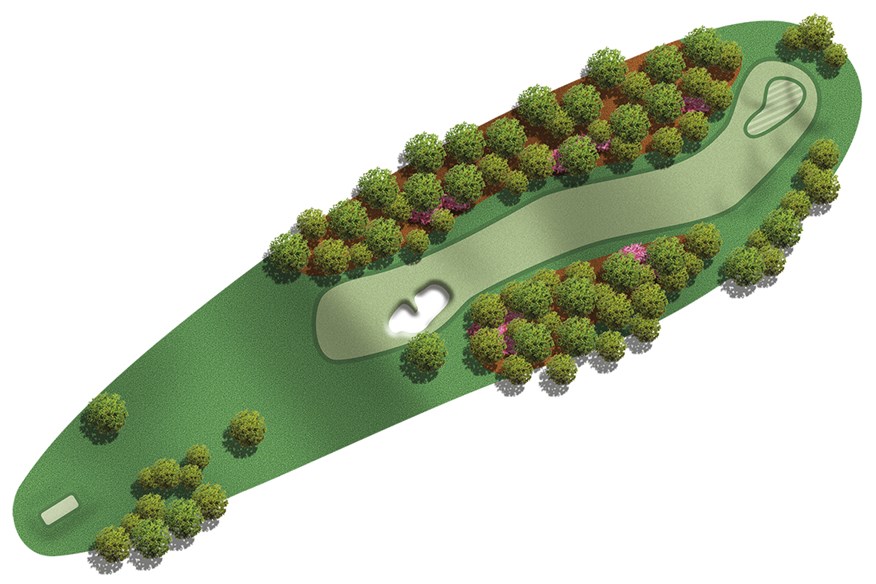
Par 5 | 570 yards
- Difficulty Rank (1 = hardest, 18 = easiest): 17
- Entertainment Factor (out of 10): 8
- John’s Grade (1 = best hole, 18 = worst hole): 15
I’m not the biggest fan of Yellow Jasmine. It is the most overlooked of the four par-5s, likely because it lacks a severe penalty for poor shots.
At 570 yards straight up hill, it’s a tall order to reach this green in two shots. As a result, it’s common to see players with either a great or poor tee shot still walk away with 5.
It played as the second-easiest hole on the course in 2025, which I credit more to the lack of bogey-or-worse outcomes than this being a gimme birdie hole. Even still, this is a spot where the longest hitters in the field expect to come away with a birdie.
Hole 9: Carolina Cherry
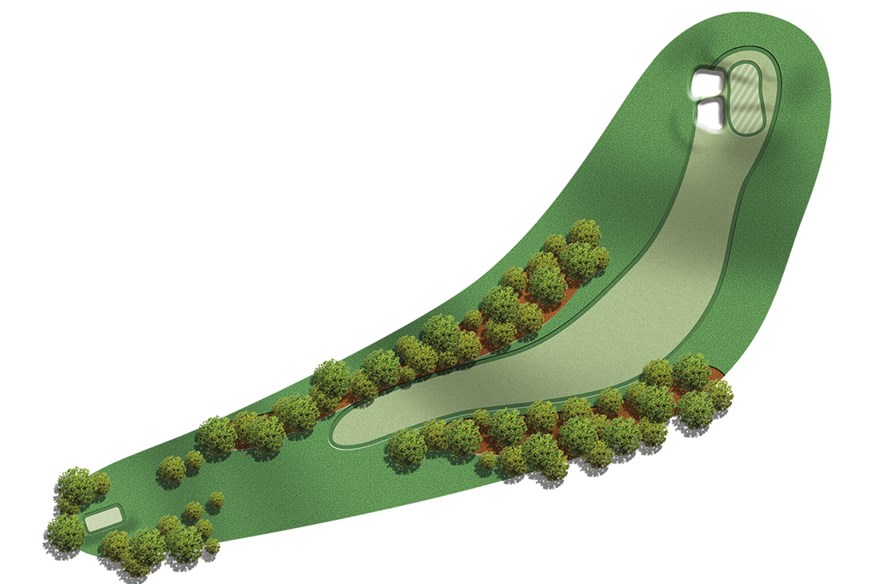
Par 4 | 460 yards
- Difficulty Rank (1 = hardest, 18 = easiest): 13
- Entertainment Factor (out of 10): 7
- John’s Grade (1 = best hole, 18 = worst hole): 13
So often, we see Carolina Cherry foreshadow the winner to come on Sunday, as a birdie here can catapult a player into the back nine with confidence.
A 460-yarder with a severe down-sloping fairway, there are birdies to be made here if positioned well in the fairway off the tee. Conversely, we’ve also seen the treeline left and right of the fairway stymie players. Heavily guarded by deeper bunkers on the left side of the green, it’s a tall order to save par for any players who miss left off the tee.
Hole 10: Camellia
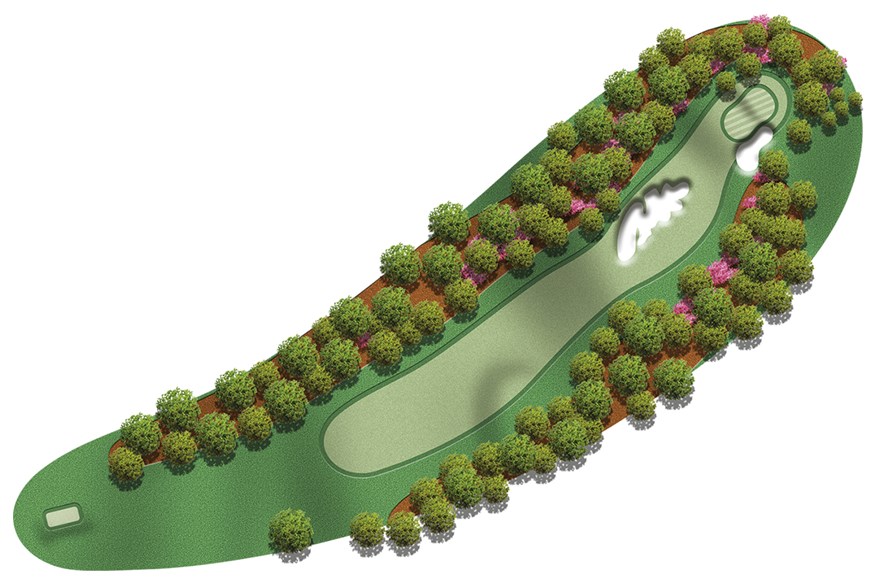
Par 4 | 460 yards
- Difficulty Rank (1 = hardest, 18 = easiest): 7
- Entertainment Factor (out of 10): 9
- John’s Grade (1 = best hole, 18 = worst hole): 7
There is so much history packed into one hole at the par-4 10th. A semi-blind tee shot into a massive down-sloping fairway, we’ve seen the nerves come undone quickly on 10 from players as they realize they are taking their home stretch towards glory. Rory McIlroy famously hooked his drive into the cabins in 2011, making triple-bogey to erase his commanding lead.
On the bright side, we’ve also seen some incredible recoveries on 10, like Bubba Watson’s slice through the trees in 2010. Aggressive, fearless players can mash gargantuan drives down this sloping fairway and set the tone for their inbound nine here.
Hole 11: White Dogwood
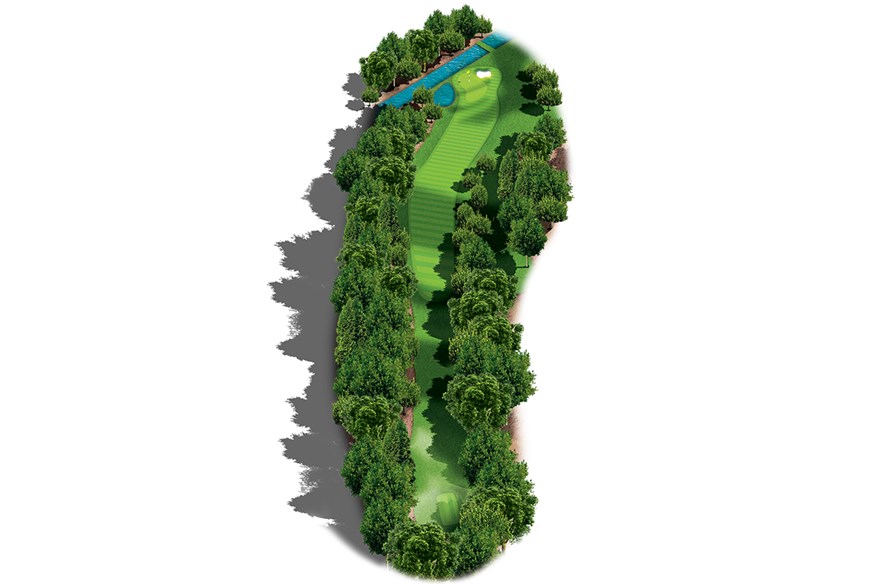
Par 4 | 520 yards
- Difficulty Rank (1 = hardest, 18 = easiest): 3
- Entertainment Factor (out of 10): 8
- John’s Grade (1 = best hole, 18 = worst hole): 6
Whit Dogwood is the start of Amen Corner, where water hazards first introduce themselves to strike even more fear into the field as nerves heighten. This great hole was made even better with the recent reconstruction to widen the right side of this fairway. The water left of this green has erased the hopes of contenders like Collin Morikawa and Ludvig Aberg in 2024.
The more conservative miss is to bail out right of this green if out of position off the tee. That, however, is no easy up-and-down, and still brings the water into play for any hot chip shots.
Hole 12: Golden Bell
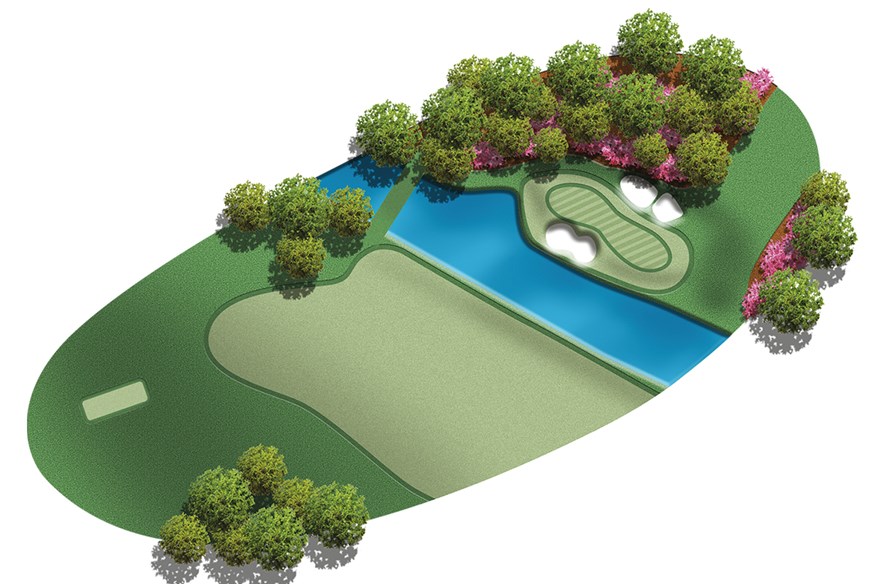
Par 3 | 155 yards
- Difficulty Rank (1 = hardest, 18 = easiest): 8
- Entertainment Factor (out of 10): 10
- John’s Grade (1 = best hole, 18 = worst hole): 2
The signature, picturesque 12th is the most aesthetically pleasing backdrop in golf. Rae’s Creek has met the demise of contenders here over the years, dashing the hopes of Cameron Smith in 2022, Francesco Molinari in 2019, Jordan Spieth in 2016, and Greg Norman in 1996.
A narrow, horizontal landing strip with bunkers and water waiting for short misses, and landscaping catching anything long, the margin for error is slim as can be on 12.
Such a simple, but well-designed par-3, how you must navigate 12 is a microcosm of how you win this tournament. Discipline, strategy, and commitment to a precise number prevail over power and recklessness.
Hole 13: Azalea
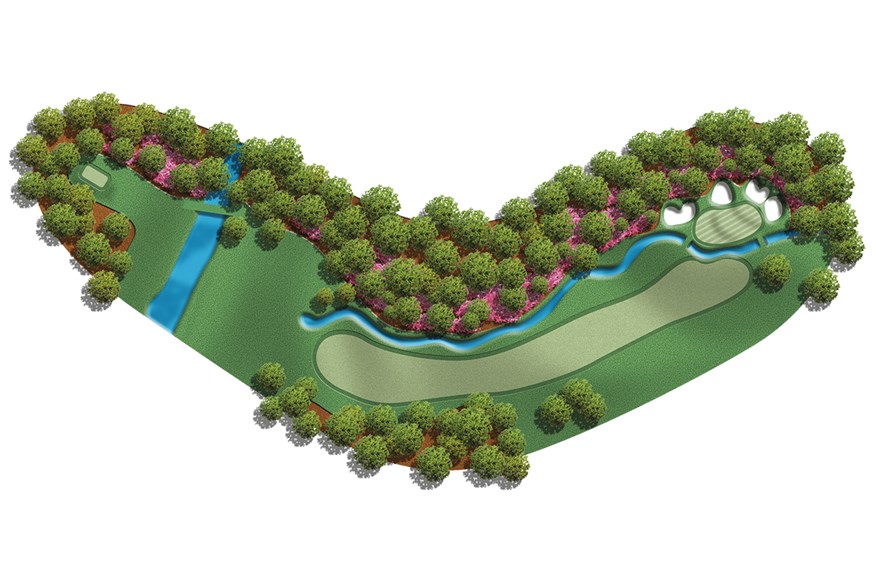
Par 5 | 545 yards
- Difficulty Rank (1 = hardest, 18 = easiest): 16
- Entertainment Factor (out of 10): 10
- John’s Grade (1 = best hole, 18 = worst hole): 1
It is often said that the tournament is won or lost here. My favorite hole at Augusta National, Azalea, truly has it all.
There’s eagle potential, as Phil Mickelson showed us when pulling off one of the most iconic shots in Masters history in 2010. There’s also double-bogey potential as Rory McIlroy displayed in 2025, dumping a flip wedge into Rae’s Creek.
Azalea requires you to work the ball right to left with the driver to have an angle into the green on your second shot. The green is easily reachable in two after a well-executed tee shot, but a right miss is a forced layup, and a left miss is out of bounds.
The long, quiet walk to this tee box with no patrons around is one of the many subtle details of Augusta National that make it a truly singular experience.
Hole 14: Chinese Fir
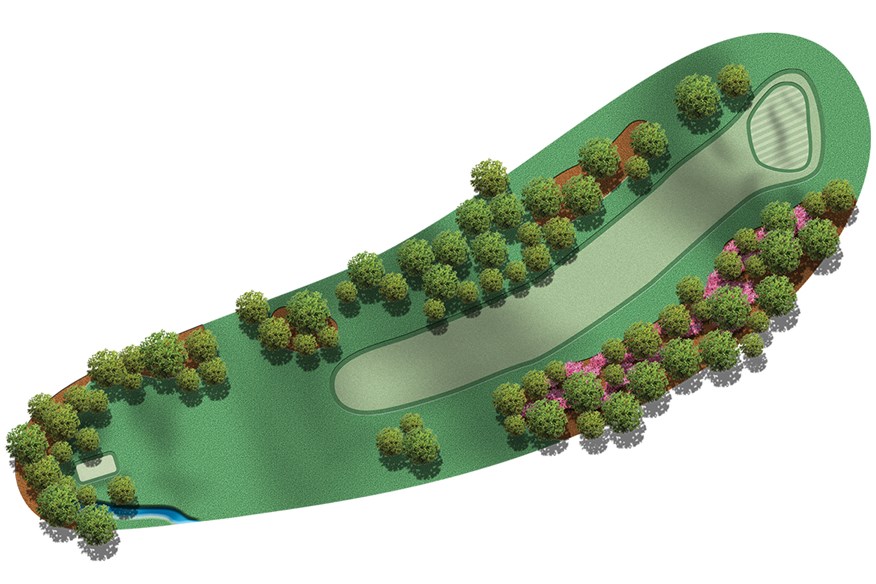
Par 4 | 440 yards
- Difficulty Rank (1 = hardest, 18 = easiest): 12
- Entertainment Factor (out of 10): 5
- John’s Grade (1 = best hole, 18 = worst hole): 16
Perhaps it is necessary to follow Amen Corner with a more basic setup on 14 to truly allow the signature holes shine. Consider this a palette cleanser in the middle of a high-octane back nine at Augusta National.
Chinese Fir doesn’t offer a ton of trouble, and is not a hole that lingers in the backs of the minds of the players. The fairway landing areas are generous, and scoring tends to fall right at level par here.
Lacking a significant historical moment and consequential swings on the leaderboard, this is one of the least exciting holes on the course for me.
Hole 15: Firethorn
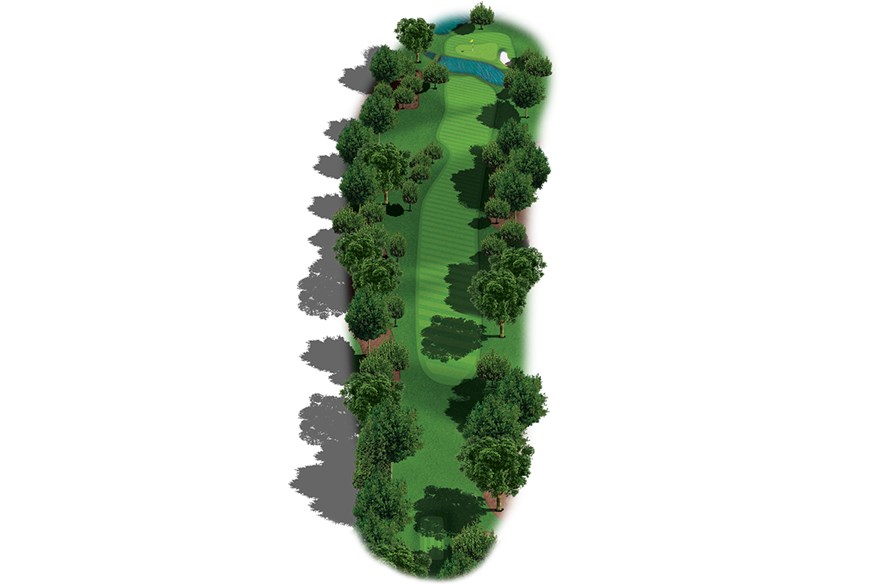
Par 5 | 550 yards
- Difficulty Rank (1 = hardest, 18 = easiest): 14
- Entertainment Factor (out of 10): 10
- John’s Grade (1 = best hole, 18 = worst hole): 5
And, we’re back to the action! All the par 5s are great at Augusta National, but Firethorn is truly special. At 550 yards with a very wide fairway, this is a hole all players step up to expecting to birdie. The severe undulations in the fairway, however, add variance to this hole in the angles players must take into pin.
Rory McIlroy pulled off one of the greatest shots in tournament history with his sweeping 7-iron draw in the final round in 2025. “The shot of a lifetime”, as Jim Nanzt called it.
As inviting as the tee shot may feel on 15, it leaves a very tricky yardage for players’ next approach. Missing short leaves you in the water hazard, and missing long is a tremendously touchy up-and-down that brings water into play again. We’ve even seen players leave it in the water when attempting to lay up short of the green. All in all, it’s a genius hole design that lends itself to a high variance of outcomes in the closing stretch of the tournament.
Hole 16: Redbud
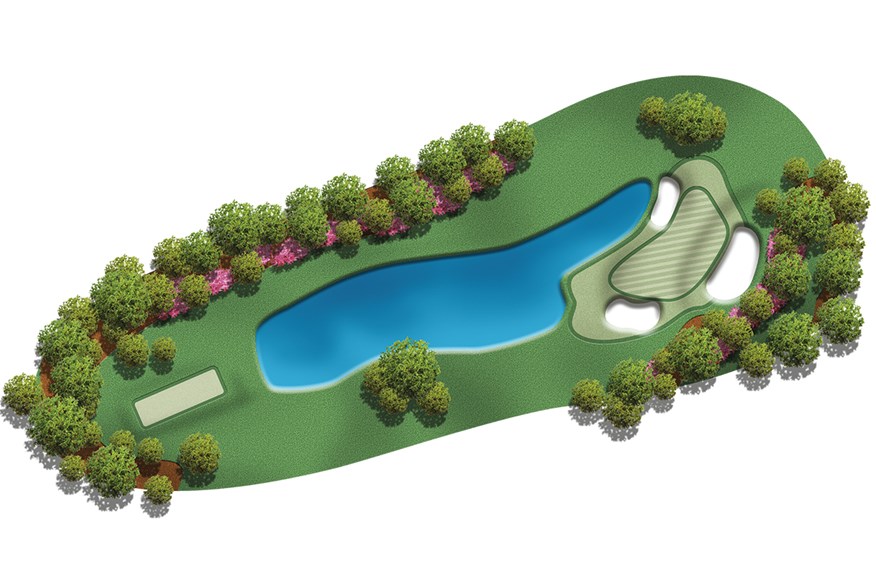
Par 3 | 170 yards
- Difficulty Rank (1 = hardest, 18 = easiest): 8
- Entertainment Factor (out of 10): 10
- John’s Grade (1 = best hole, 18 = worst hole): 8
Yet another iconic par 3 at Augusta National, and the home of Verne Lundquist’s residency for decades.
I’m not the biggest fan of some of the funnel pin locations this hole creates, but in any case, it represents yet another example of a hole that requires you to hit a precise target line, even if that line is not where the pin is.
Birdies can fuel the fire of a closing heater here, like Charl Schwartzel showed in 2011. Those birdies can also come from unexpected places, as Tiger Woods proved in 2005 with arguably the most famous shot in tournament history.
Bogeys or worse loom on 16 as well, however, as we’ve seen contenders wither away here with tee shots that find the water, or leave themselves too far above the hole.
Hole 17: Nandina
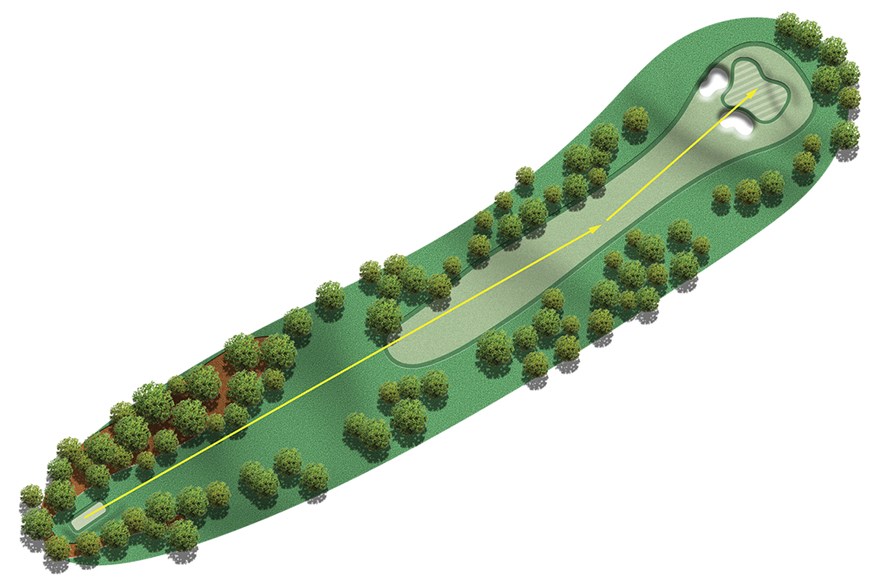
Par 4 | 450 yards
- Difficulty Rank (1 = hardest, 18 = easiest): 4
- Entertainment Factor (out of 10): 5
- John’s Grade (1 = best hole, 18 = worst hole): 17
I’m really not crazy about Nandina. It’s an anti-climactic penultimate hole as far as I’m concerned. The 17th hole should either strike the fear of holding onto a narrow lead, or present a high variance split of outcomes. This hole does neither, instead giving players an option to be conservative off the tee and play for Par.
Aggressive players can be rewarded with birdie opportunities here, however, as Rory McIlroy showed last year. All in all, this is a hole in which players can lay back off the tee and still have a short iron into the green for a late birdie look.
Hole 18: Holly
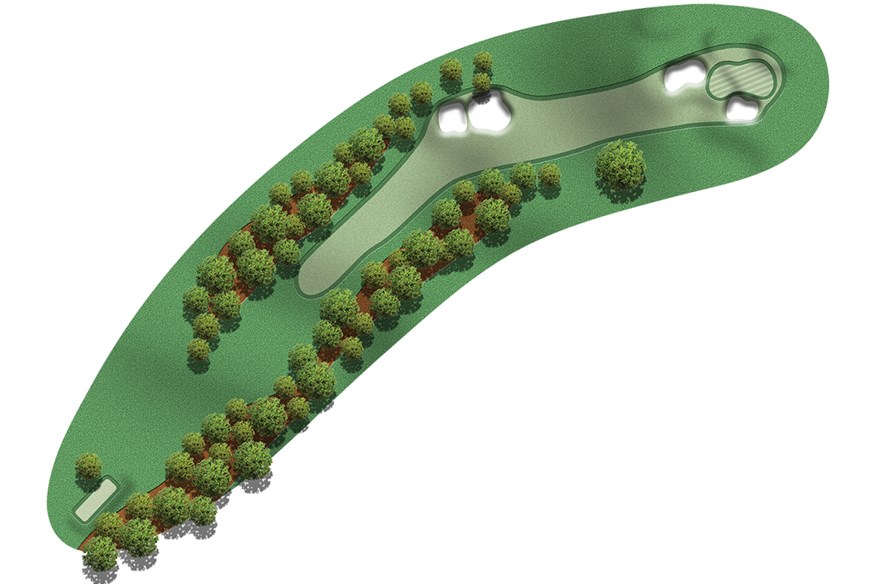
Par 4 | 465 yards
- Difficulty Rank (1 = hardest, 18 = easiest): 2
- Entertainment Factor (out of 10): 10
- John’s Grade (1 = best hole, 18 = worst hole): 10
Holly is a highly entertaining finishing hole for obvious reasons. The narrow driving corridor is iconic. Dustin Johnson said he started to play a fade just to be able to handle this tee shot.
The 18th hole at The Masters needs to be nerve-racking. It needs to be a tee shot you’re thinking of all round with the most important event of your life on the line. This delivers that.
I do wish the approach had a little more nuance to it, but maybe that’s the whole point? A reminder that much of this golf course is right in front of you, if you can get past the unnerving humps and hollows along the way. It’s a pitching wedge in for most in the field, but but we’ve seen plenty more bogeys-or-worse than we do birdies on the second most difficult hole at Augusta National.
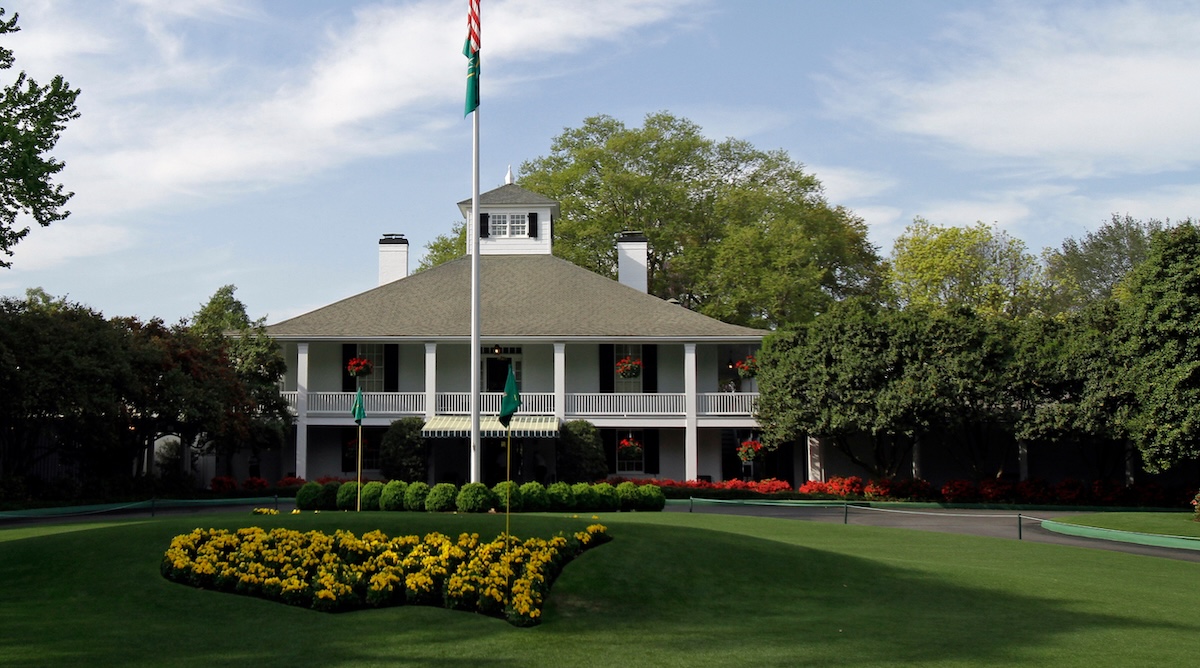
Photo Credit: AP/Rob Carr
Hole Graphics: Masters.com