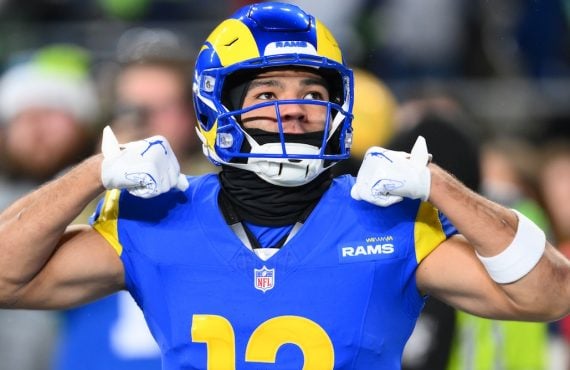
49ers-Rams DFS Picks: Best Value Plays, NFL Week 1
49ers-Rams DFS picks: our best value plays and DraftKings salaries for every position, from Mike Evans down to Blake Corum.
Fantasy football lets you build a roster of NFL players and compete against friends, with your lineup scoring points from real game stats every week. This hub brings together the Lineups projections, daily fantasy tools and beginner guides that help you set better lineups, whether you play season-long leagues or daily fantasy contests.
Start with the tools below, then use the guides to get comfortable with scoring, league formats and strategy. If you prefer daily contests, the DFS section below explains how they work and points you to our projections and picks.
Our projections are built around daily slates, which also makes them a handy way to compare matchups before you lock in a lineup. The NFL page is the core tool, and the other pages cover the rest of the fantasy calendar.
Champions League DFS picks for today's slate: salaries and value plays for all matches, plus our top play — Michael Olise 1+ Assists (+115)
49ers-Rams DFS picks: our best value plays and DraftKings salaries for every position, from Mike Evans down to Blake Corum.
Check out the best UEFA Champions League DFS and prop market picks and predictions for Wednesday, September 9 from Lineups.com.
Check out the best DFS picks for the Patriots vs. Seahawks scheduled for Wednesday, September 9 with odds and insights…
In a season-long league, typically 10 to 12 managers each draft a roster of NFL players. Roster settings vary, but a standard lineup includes a quarterback, running backs, wide receivers, a tight end, a FLEX spot (usually RB, WR or TE), a defense and special teams unit (D/ST) and sometimes a kicker. Each week you set your starters, and they earn points from their real-game stats. In head-to-head leagues you face one league member per week, and the top teams by record move on to the playoffs near the end of the NFL season.
Most leagues use a snake draft, where teams pick in order and the order reverses every round. The manager who picks last in round one picks first in round two. In an auction draft, every manager gets the same budget, often $200, and bids on players as they are nominated. Auctions let you chase any player you want, but you pay for it with less money for the rest of your roster.
Standard (non-PPR), half-PPR and full PPR describe how many points players earn for each reception: 0, 0.5 or 1. Other scoring settings, such as passing touchdowns, yardage bonuses and turnovers, can also vary by league.
| Format | Points Per Reception | Who It Favors |
|---|---|---|
| Standard | 0 | Players who score through yardage and touchdowns |
| Half-PPR | 0.5 | A balance between volume and touchdowns |
| PPR | 1 | Pass-catching running backs and high-volume receivers |
Assuming 1 point per 10 receiving yards and no other scoring events, six catches for 50 yards earn 5 points in non-PPR, 8 in half-PPR and 11 in full PPR. Players who rely more on yardage and touchdowns have greater relative value in non-PPR leagues. Half-PPR is a popular middle ground, and none of the three is right or wrong, so check your league settings before you build a draft board.
Beyond scoring, leagues can be built in several different ways. Here is a quick guide to the formats you are most likely to see.
| Format | How It Works | Best For |
|---|---|---|
| Redraft | You draft a new roster every year and make weekly lineup and waiver moves | Beginners and anyone who wants a fresh start each season |
| Dynasty | You keep your roster year after year and add talent through trades and rookie drafts | Long-term planners who enjoy running a team like a front office |
| Best Ball | You draft a roster and your highest-scoring eligible lineup is counted automatically each week. Many draft-only contests do not allow waivers or trades, while some private leagues permit roster moves | Managers who love drafting but want less weekly maintenance |
| SuperFlex | A flexible starting spot that can be filled by a quarterback, running back, wide receiver or tight end | Managers who want quarterbacks to carry more draft value |
| IDP | Individual defensive players are added to your starting lineup alongside the usual offensive spots | Football fans who want to follow every side of the ball |
Start with your league settings. Scoring, roster spots and league size all change player values, and a larger league means running backs and other scarce positions disappear faster. Build a draft board in tiers, so you can see where the drop in production comes at each position and decide when to act. Go in with more than one plan, because the draft rarely unfolds the way you expect.
Two things to avoid overvaluing are strength of schedule and bye weeks. Schedule ratings are usually based on past results, which can change quickly once the season starts. Stacking too many players with the same bye can leave one weak week, but that is usually a better problem to have than reaching for a lesser player just to spread the byes out.
Waiver schedules and priority rules vary by league. Claims may process weekly or on selected days, using rolling priority, reverse standings or a free agent acquisition budget (FAAB). Check your league settings and rank multiple claims in your preferred order, because another manager may win your first choice.
Streaming means using short-term starters based on matchups and availability, then swapping again the following week. Common options include D/ST, kickers, quarterbacks in one-QB leagues and tight ends. It works best when you plan ahead around a favorable run of opponents instead of reacting to a single good week.
Season-long leagues involve managing a team throughout the NFL season, often through trades and waiver moves. In salary-cap daily fantasy football contests, you select a lineup for a specific slate within a set budget, rather than taking turns drafting players. That makes DFS a good fit for managers who like to research matchups every week, and our NFL projections are designed for exactly that.
Contests are offered by platforms such as DraftKings and FanDuel, and age and location requirements vary by state, so always check the operator's terms before you play. If you are also weighing newer options, see how prediction markets compare with daily fantasy sports, or browse our NFL betting sites guide for odds-based options.
You and the other managers in your league draft rosters of NFL players. Each week you set a starting lineup, and your players earn points based on their real-game stats. In head-to-head leagues you face one opponent per week, and the best teams reach the playoffs.
Pick a fantasy platform, then join a public league or create a private one with friends before the draft. You can usually choose the scoring format, league size and draft type. Both free leagues and paid-entry leagues are available.
A snake draft is a draft where teams pick in a set order and the order reverses every round. The manager who picks last in round one picks first in round two, and the pattern repeats until every roster is full.
In an auction draft, every manager gets the same budget, often $200, and bids on players as they are nominated. The highest bid wins the player, so you can pursue any player you like, but each purchase reduces the money left for the rest of your roster.
A mock draft is a practice draft that does not count toward a real league. You pick against other users or computer-controlled teams, which helps you test strategies and get comfortable with draft timing.
PPR stands for points per reception. In a full PPR league, every catch earns 1 point, in half-PPR it earns 0.5 points, and in standard scoring it earns none. PPR scoring adds value to pass-catching running backs and high-volume receivers.
In a redraft league, you draft a new roster every season. In a dynasty league, you keep your players from year to year and add talent through trades and rookie drafts, so decisions have a much longer horizon.
Best ball automatically counts your highest-scoring eligible lineup each week. Many draft-only contests do not allow waivers or trades, while some private leagues permit roster moves.
A SuperFlex league uses a flexible starting spot that can be filled by a quarterback, running back, wide receiver or tight end. Unlike a two-quarterback format, it does not require you to start a second quarterback.
IDP stands for individual defensive players. In an IDP league, you start defensive players such as linebackers and defensive backs in addition to your usual offensive positions, and they score points through their own stat categories.
In salary-cap daily fantasy football contests, you build a new lineup for each slate of games within a set budget. There is no season-long commitment, and contests are available on platforms such as DraftKings and FanDuel, subject to state rules.
Most season-long drafts take place in late August or early September, before the NFL regular season kicks off. Best ball and dynasty leagues can draft much earlier, and some managers start preparing right after the previous season ends.
lineups.com publishes promotions, independent reviews, expert guides, and news about legal sports betting and gambling to help readers make informed decisions. We support responsible gambling and, where available, focus coverage on licensed and regulated operators.
Problem gambling help: call 1-800-GAMBLER or visit ncpgambling.org 21+ only. Please play responsibly.
Affiliate disclosure: Some links may earn us compensation. This doesn’t influence our editorial content. Offers and terms can change—always check the operator’s official terms.